01
The main loading line is occupied
The port’s own equipment is already fully loaded with its current flow.
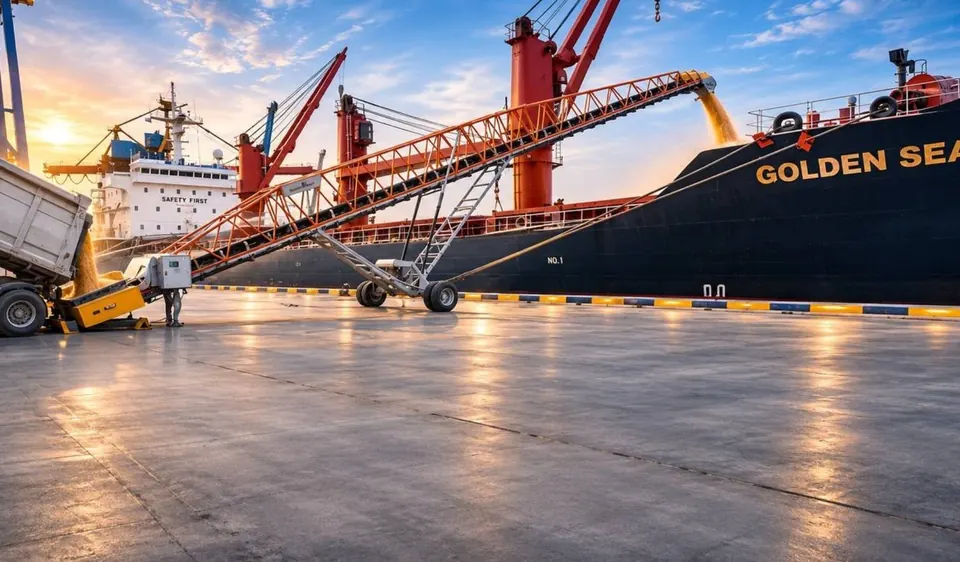
A parallel loading line for an additional cargo flow — set up at your berth, while the port’s main equipment keeps working on its own flow.
We don’t sell equipment. We take on the additional loading operation.
Prefer email? [email protected]
We are useful where the existing setup can no longer put additional volume to work quickly.
The port’s own equipment is already fully loaded with its current flow.
Berth capacity exists, but there is no loading line working on it.
Extra volume arrives that the current setup was not planned for.
The terminal needs results this season, not after a construction project.
A separate technological flow operates simultaneously with the port’s main line.
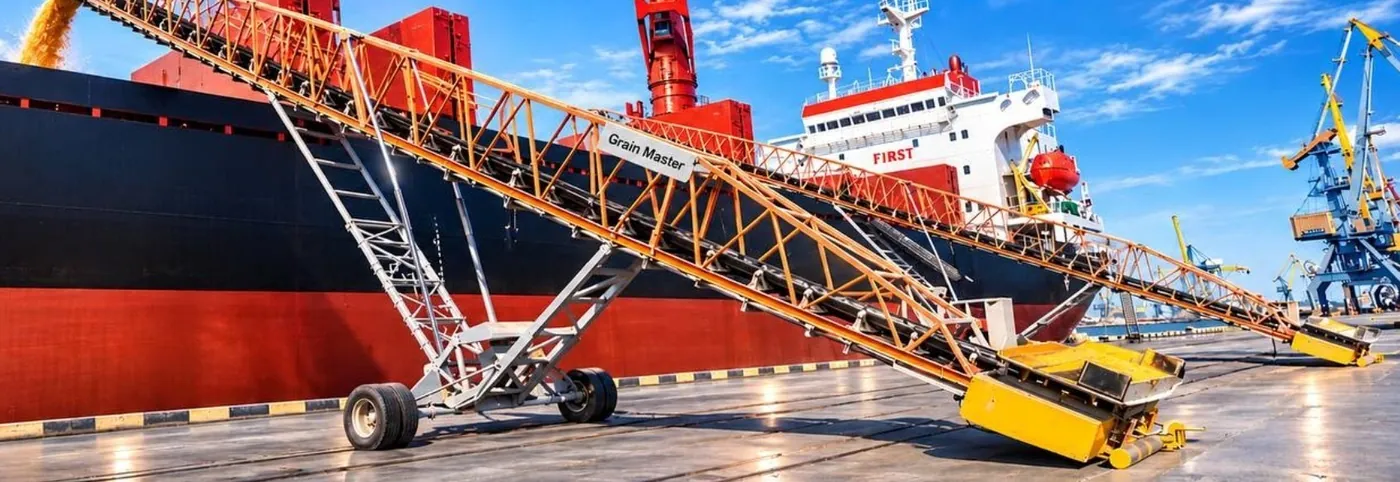
We are useful to the port not as an equipment seller, but as additional working capacity.
Capacity reserve when the main line is busy.
Use of berths that are free or underused.
To match the actual cargo flow, the season and new contracts.
Equipment, personnel and support on our side.
A proven scheme can be scaled once the result is confirmed.
First the terminal’s task. Then the technological scheme, responsibility and commercial terms.
That is enough to understand the real effect of the technology at your terminal.
We look at the berth and the existing loading setup on site.
Together we select one specific cargo flow for the pilot.
We choose the equipment configuration for that berth and cargo.
Throughput, safety and loading quality are agreed in advance.
We run the pilot operation and evaluate the result together.
If the scheme works, we scale it by adding feeders and extending the line. If not, the port isn’t left with unsuitable purchased equipment.
We choose one berth and one real cargo flow. Then we prepare a project-specific technological scheme for your technical team.